Hacienda Avenue Green Street Project, City of Campbell
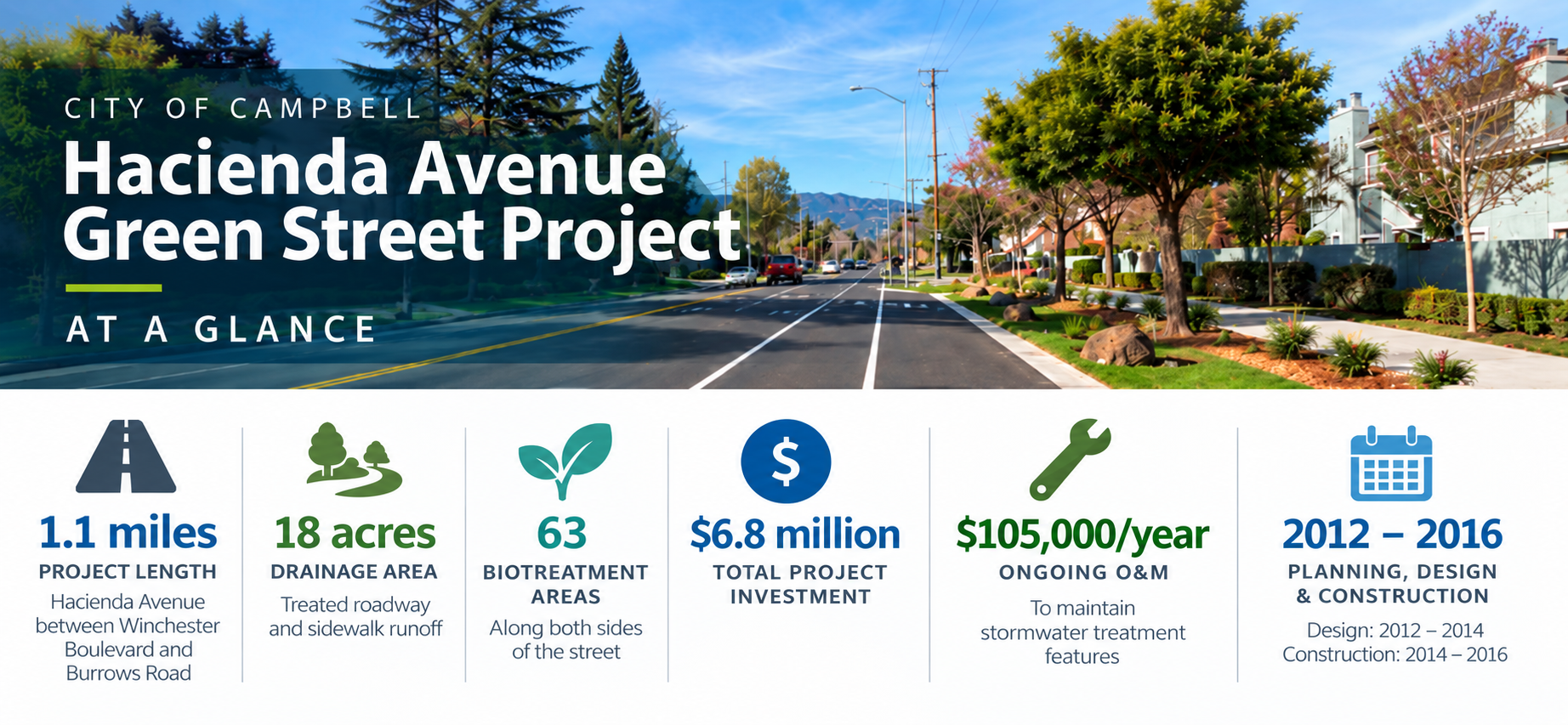
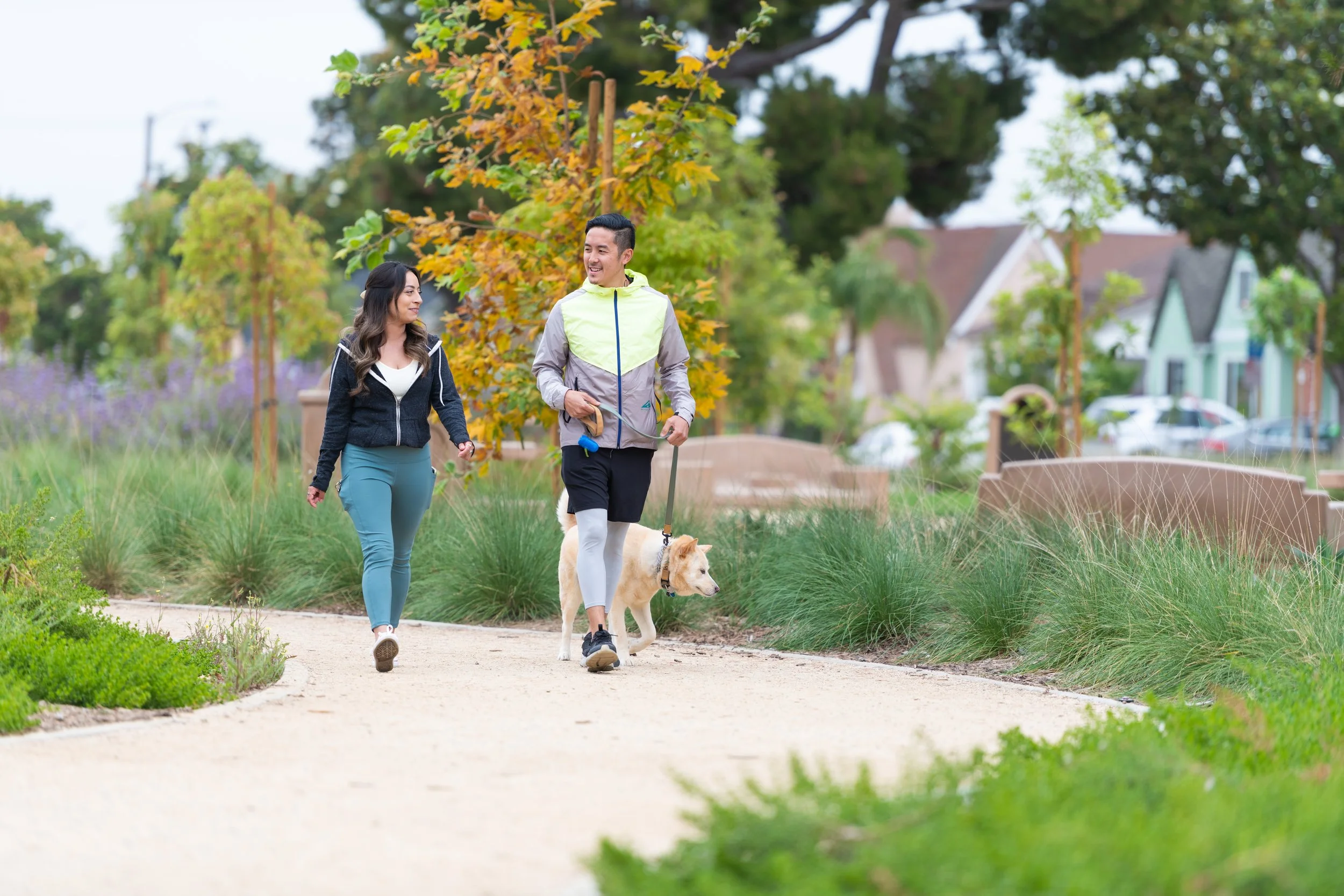
Hacienda Avenue Green Street Project at a Glance/ Photo Credit: City of Campbell
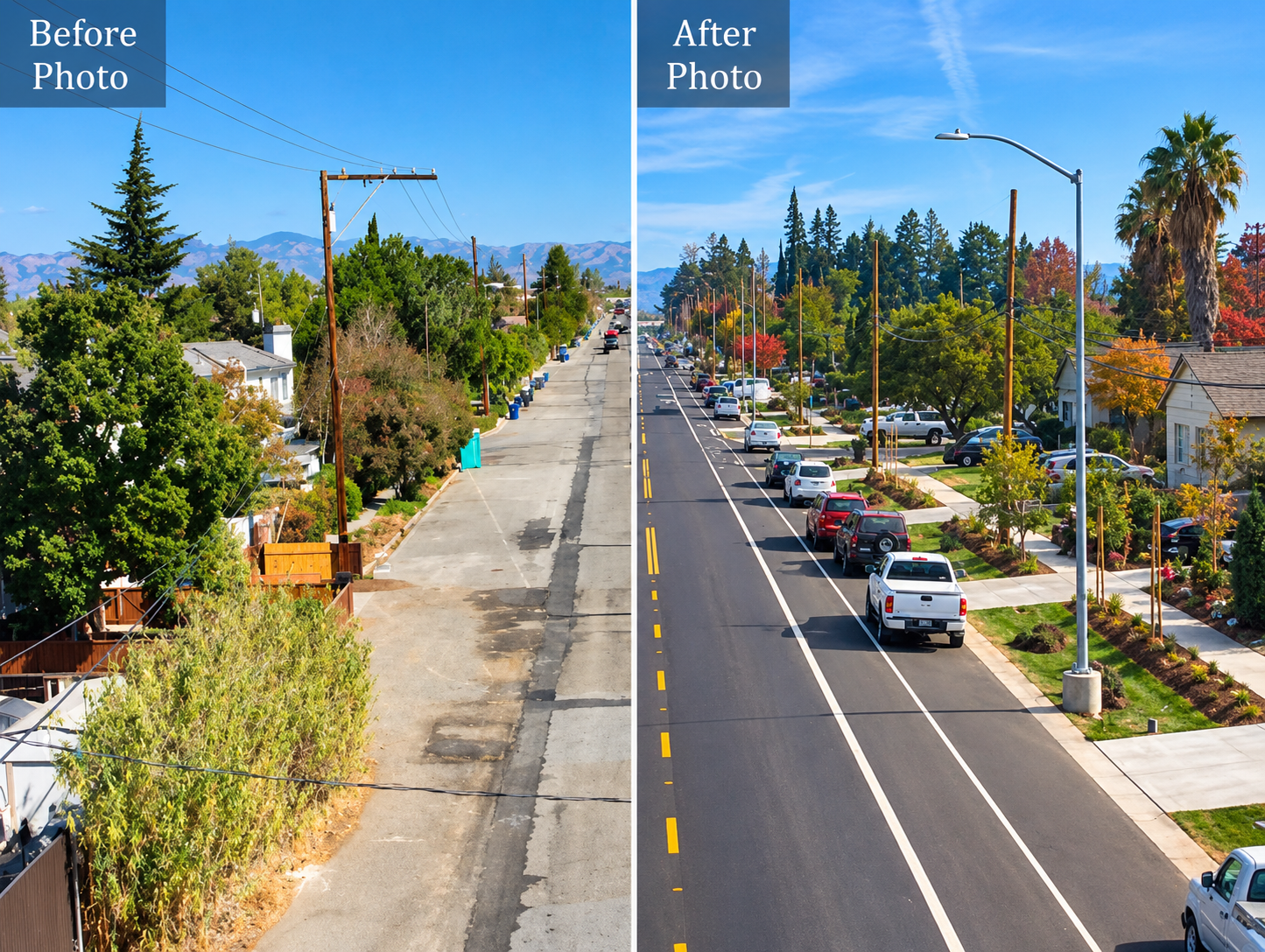
Hacienda Ave (City of Campbell) / Photo Credit: City of Campbell
Biotreatment areas were installed along both sides of Hacienda Avenue to treat runoff from the street and sidewalk. The facilities were sized using the Santa Clara Valley Urban Runoff Pollution Prevention Program (SCVURPPP) methodology, using a combination flow- and volume-based approach. A flush-curb design allows roadway runoff to sheet flow directly into the landscaped treatment areas. Because the site has highly infiltrative native soils, the biotreatment areas were constructed directly over native soil without underdrains, allowing treated stormwater to infiltrate into the ground. An overflow system provides connection to the storm drain system during larger events.
Project Description
The City of Campbell’s Hacienda Avenue Green Street Project transformed 1.1 miles of a wide residential collector street into a multimodal green street that integrates green stormwater infrastructure with roadway, bicycle and pedestrian improvements. Biotreatment facilities installed along the corridor capture and treat runoff from the roadway and sidewalks, demonstrating how green stormwater infrastructure can be incorporated into a large-scale roadway improvement project.
Planning and design began in 2012, with construction complete in 2016. The project represented a significant early investment by the City in green stormwater infrastructure at a time when these types of projects were still relatively new in the region. The approximately $6.8 million project was funded primarily by the City of Campbell, with approximately 60% in City funds and 40% from grants through the California Department of Water Resources Proposition 84 Integrated Regional Water Management Grant Program and the Valley Transportation Authority's Community Design and Transportation Program.
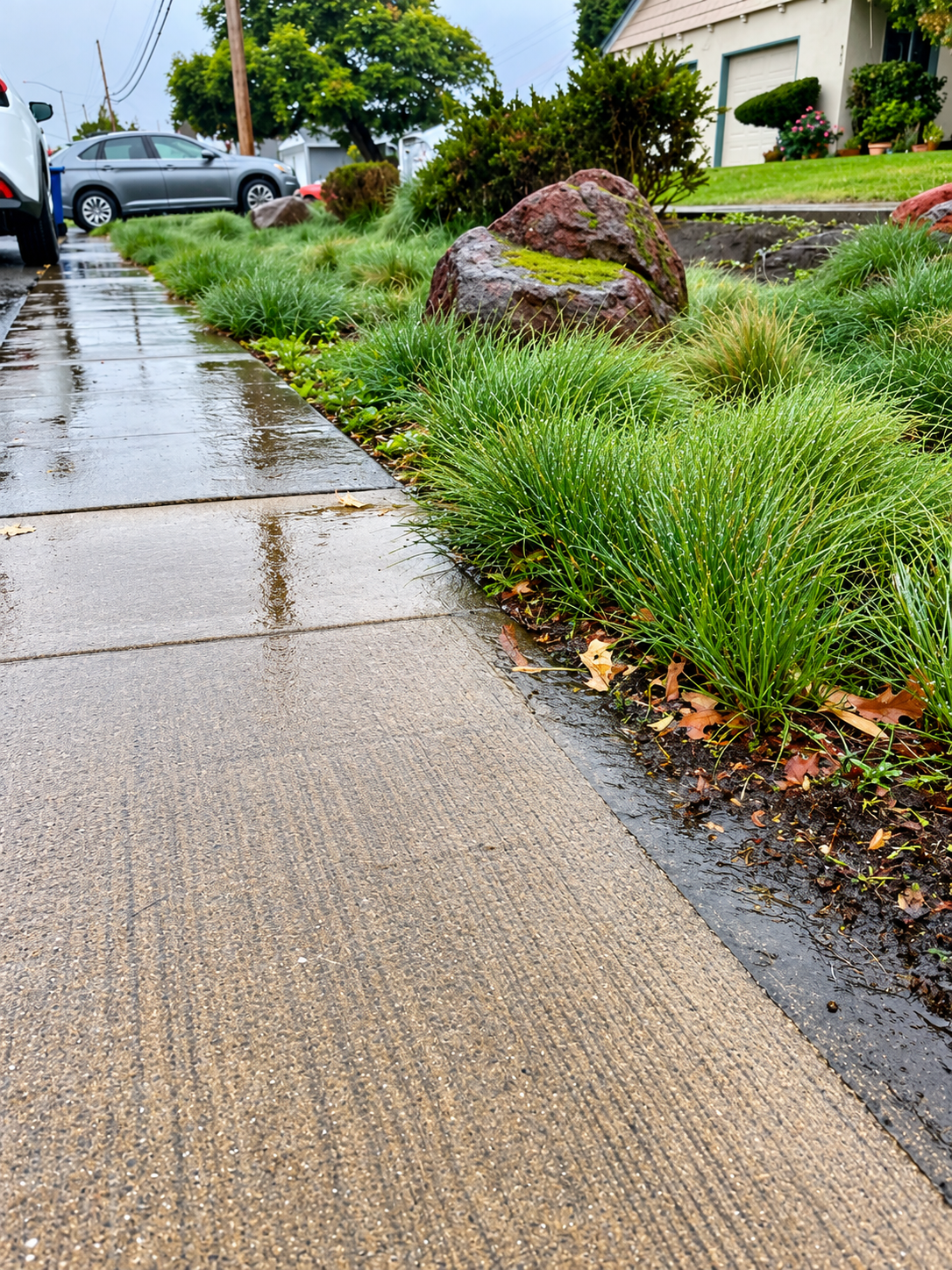
Hacienda Ave (City of Campbell) / Photo Credit: West Valley Stormwater Authority
The project was designed to provide benefits well beyond stormwater treatment. The roadway was narrowed through a "road diet," new bicycle lanes and continuous sidewalks were added, intersections received bulb outs to improve pedestrian safety, bus stops were improved, and 60 new street trees and drought-resistant landscaping were installed. Recycled materials were also incorporated into the roadway reconstruction. The full-depth reclamation approach reused more than 80% of the existing roadway material and reduced costs compared with conventional removal and replacement.
Nearly a decade after construction, Hacienda Avenue continues to represent a substantial and ongoing commitment by the City of Campbell to green stormwater infrastructure. In addition to the significant initial capital investment, the City currently spends approximately $105,000 annually to operate and maintain the project’s stormwater treatment facilities. These costs will continue over the life of the facilities to ensure they remain functional and continue to provide water-quality benefits. This long term investment demonstrates that green infrastructure is not simply a one-time capital improvement, it requires an ongoing municipal commitment to operation, maintenance, and long-term performance.
The Hacienda Avenue project demonstrates how stormwater management can be incorporated into broader transportation and neighborhood improvements to provide multiple community benefits from a single public investment. The project has reduced localized flooding and provides stormwater treatment and significant infiltration of runoff. By retaining and infiltrating stormwater within the project corridor, the project also reduces the volume and rate of runoff reaching the downstream creek, helping reduce potential erosion and flooding impacts while supporting groundwater recharge. The project also provides stormwater treatment while also improving pedestrian and bicycle connectivity, increasing tree canopy and landscaping, reducing roadway heat-island effects, and encouraging active transportation.
The project earned Greenroads Silver Certification, CASQA Stormwater & Sustainability Award and was designated a Bay-Friendly Rated Landscape.
Techniques Used
Biotreatment/bio-infiltration areas along both sides of the roadway
Flush curbs allowing roadway runoff to sheet flow into treatment areas
Infiltration into highly permeable native soils
Biotreatment facilities sized using SCVURPPP flow- and volume-based methodology
Overflow connections to the storm drain system
Bay-Friendly, drought-resistant landscaping
Approximately 60 new street trees
Full-depth roadway reclamation and reuse of existing pavement materials
Road diet and traffic-calming improvements
Bicycle lanes, improved bus stops and continuous sidewalks
Pedestrian bulb-outs
Energy-efficient LED street lighting
Educational signage
Rain Ready Benefits
Stormwater treatment
Infiltration and groundwater recharge
Runoff, flood, and erosion reduction
Long-term water-quality benefits
Urban greening
Water conservation
Sustainable materials
Safer, more connected streets
Multiple-benefit public investment
Replicable green street model
Case Studies
-
![County of LA’s Safe Clean Water Program]()
County of LA’s Safe Clean Water Program
This one-of-a-kind program invests approximately $280 million annually into multi-benefit rainwater collection projects and programs.
-
![Earvin Magic Johnson Park]()
Earvin Magic Johnson Park
The rainwater collection system at this popular park collects up to 85% of the water that was flowing away and brings community health benefits to a disadvantaged area.
-
![East Los Angeles Sustainable Median Stormwater Capture Project]()
East Los Angeles Sustainable Median Stormwater Capture Project
The project collects more rainwater, while also adding much-needed greenspace to a couple of parched and barren medians in East Los Angeles.
-
![Fresno Metropolitan Flood Control District Stormwater Basin System]()
Fresno Metropolitan Flood Control District Stormwater Basin System
The system collects and channels rainwater that once caused flooding. But is now channeled safely to recharge the water supply, while adding green space and places for rest and recreation.
-
![San Mateo County Sustainable Streets Master Plan]()
San Mateo County Sustainable Streets Master Plan
The Plan includes multi-benefit projects designed to improve street conditions for walkability, cycling, urban greening, climate resiliency and water quality.
-
![Elk Grove Rain Garden Plaza]()
Elk Grove Rain Garden Plaza
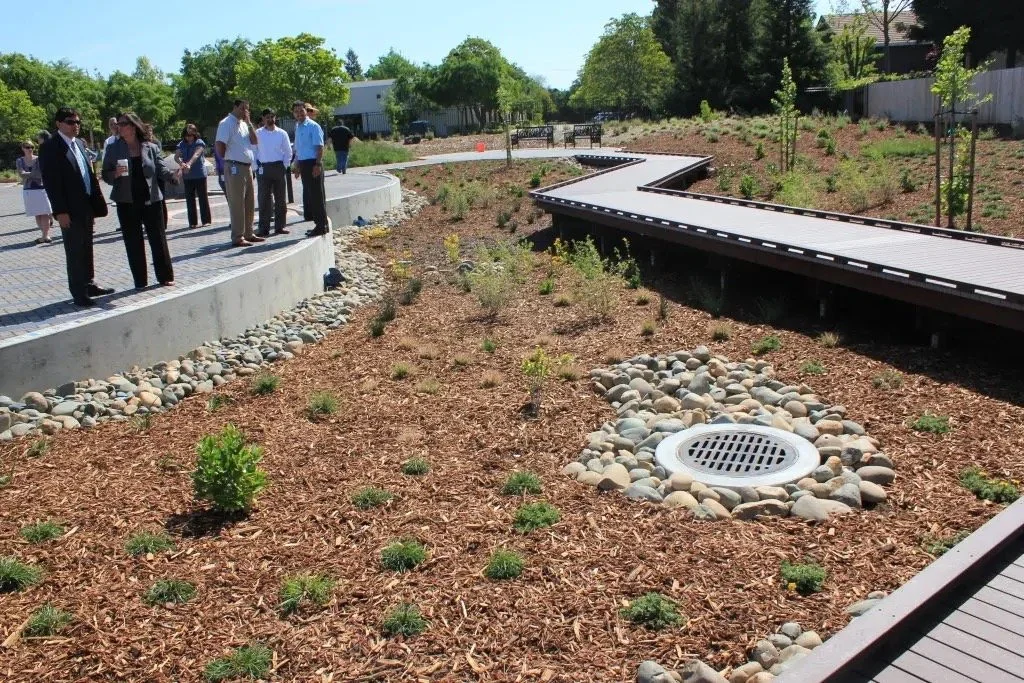
This one-acre site incorporates a wetland, surrounded by swales and native plants/trees, a large rain garden, examples of pervious paving material and rain barrels and rain chains.
-
![]()
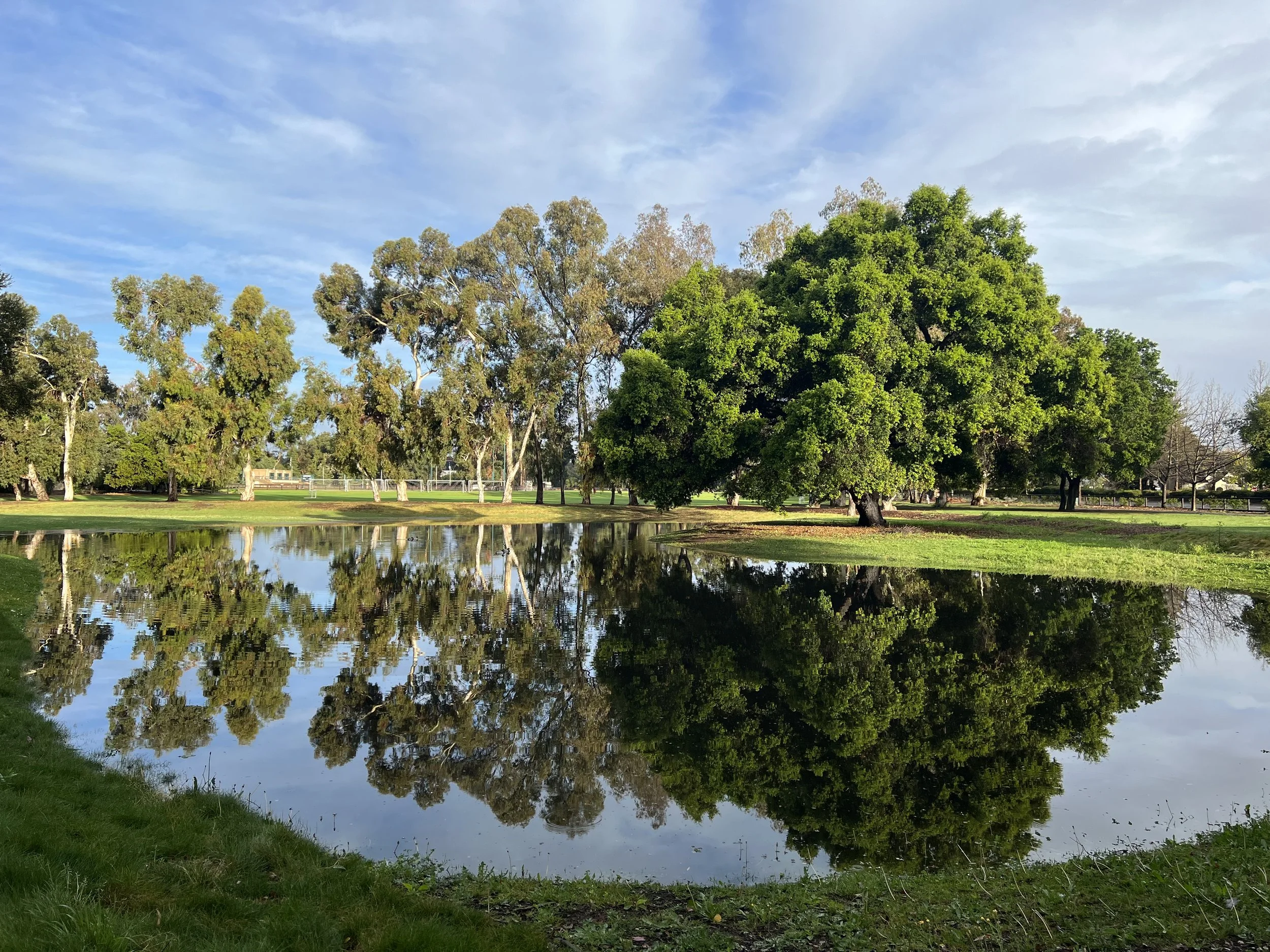
Stanford University Stormwater Capture & Use Facilities
These facilities collect 130 million gallons of water to supplement the potable irrigation system and provide benefits to the campus community.
-
![Orange Memorial Park, South San Francisco]()
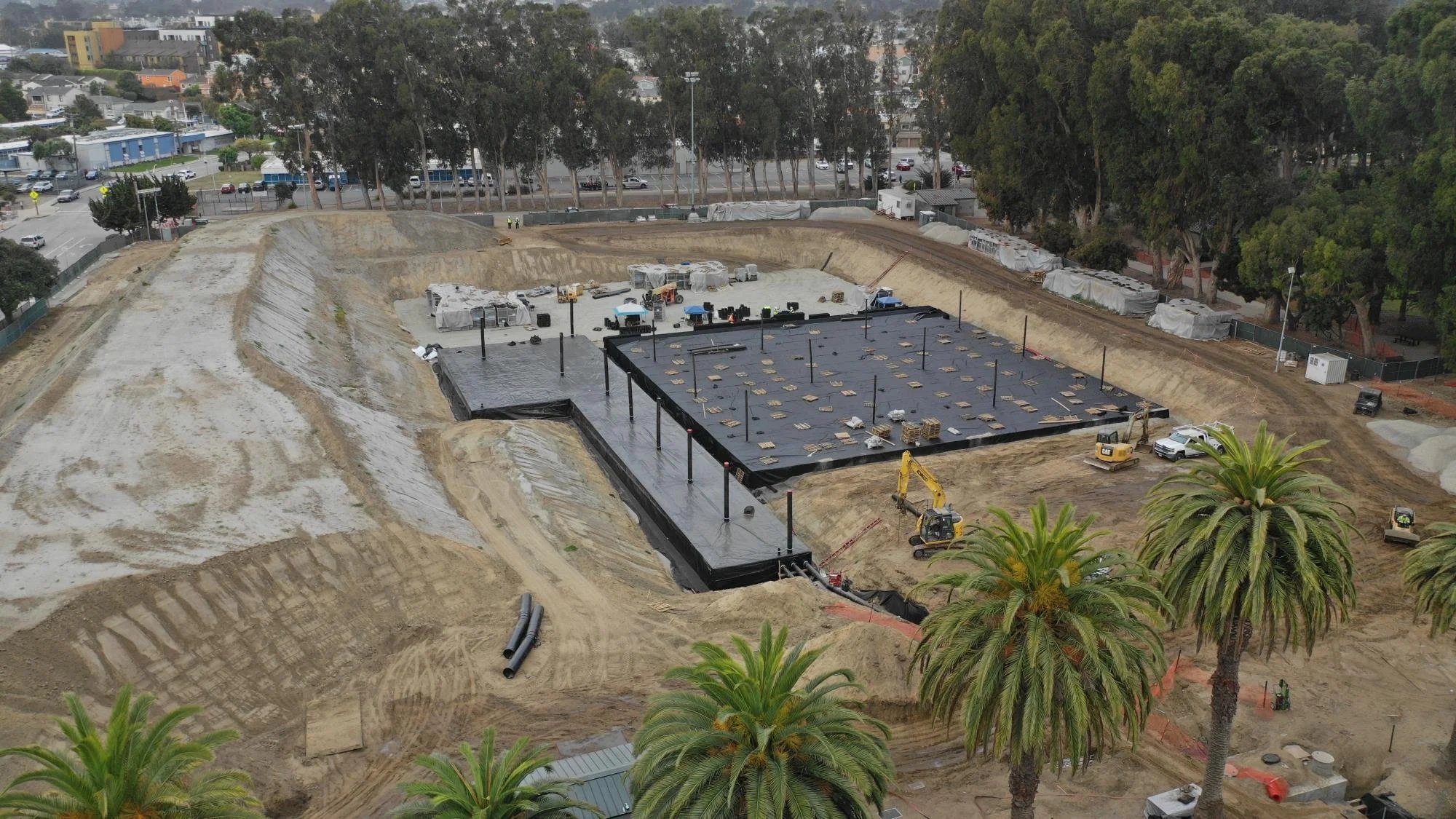
Orange Memorial Park, South San Francisco
This park is the site of an underground rainwater collection project that will return as much as 78 million gallons of water to the groundwater basin each year, while providing renovated athletic fields for the community.